A cracked screen can turn a normal morning into a problem fast. Maybe you cannot read a work message, your phone will not charge before school pickup, or a single drop has left dark lines across the display. The best reasons to repair phones are not just about avoiding a new-device purchase. A professional repair can protect the information you rely on, reduce disruption, and keep a device you already know working the way it should.
For many common issues, repair is the practical first move. The right choice depends on the phone’s age, the type of damage, and the cost of the repair compared with replacement. But a cracked screen, worn battery, charging problem, or camera issue does not automatically mean your phone is finished.
1. Repairing a phone usually costs less than replacing it
A new smartphone can be a major expense, especially when you factor in sales tax, accessories, insurance, and the cost of moving to a new plan. Even a modest upgrade can cost hundreds of dollars. In contrast, a screen replacement, battery replacement, charging port repair, or camera repair often restores the part that is actually causing the trouble for far less.
This is especially true when the rest of the device still performs well. If your phone is fast enough for your daily apps, holds a reliable connection, and has no serious motherboard damage, replacing one failed component is often the better value.
There are exceptions. If a phone is very old, has multiple major failures, or needs an expensive board-level repair, putting money toward another device may make more sense. A reputable repair shop should explain that clearly rather than pushing a repair that is not worth it.
2. You get your everyday routine back faster
Your phone is your alarm clock, camera, map, wallet, calendar, and connection to work, family, and school. Going without it for several days can create far more stress than the damage itself. Ordering a replacement may also mean waiting for shipping, visiting a carrier store, transferring data, and setting up every app again.
Same-day repair helps limit that disruption. Many screen, battery, and charging issues can be addressed quickly when the needed parts are available. Instead of learning a new device or relying on an old backup phone, you can get back to the one that already fits your routine.
For Nashua-area commuters, parents, students, and small business owners, time matters. A quick repair can mean keeping access to navigation, two-factor authentication, customer calls, and family communication without missing a beat.
3. Repair helps protect your photos, messages, and accounts
The phone in your hand holds much more than a contact list. It may contain years of family photos, text conversations, work documents, saved passwords, notes, health information, and authentication apps. When a damaged phone still powers on, repairing it can give you a chance to access, back up, and organize that information before the problem gets worse.
A failing battery, loose charging port, or damaged screen can make backup difficult. The longer you wait, the greater the chance that the phone stops turning on altogether. Getting help early can preserve access to the data that would be hardest to replace.
Before bringing in a device, back it up if possible and know your passcode. For privacy, you should also use a repair provider that treats your personal information with care. Certified technicians generally need only the access necessary to test the repair and confirm that key functions work properly.
4. A quality repair can extend the useful life of a good device
Phone batteries wear down. Charging ports collect debris. Screens crack. These are common wear-and-tear problems, not proof that the entire phone has failed. Replacing the affected part can add meaningful life to a device that still meets your needs.
Battery replacement is a strong example. If a phone shuts down unexpectedly, drains before the day is over, or becomes sluggish under normal use, an aging battery may be the issue. A new premium-grade battery can improve daily reliability without requiring you to replace a phone you otherwise like.
The same idea applies to damaged displays. A cracked screen may still respond to touch, but small cracks can spread, expose the display to moisture, and make the phone harder to use safely. Addressing the damage early is usually easier than waiting until the display becomes completely unresponsive.
5. The best reasons to repair phones include less waste
Replacing a phone for a single broken component creates unnecessary electronic waste when the rest of the device is still usable. Phones contain materials that require energy and resources to produce, transport, and process. Keeping a working device in service longer is a practical way to reduce waste without asking you to sacrifice convenience.
Repair is not always the greenest answer if a phone has severe water damage, a failing board, and several worn components. Still, when one repair restores normal use, it prevents a perfectly capable device from being discarded too soon.
If repair is not the right path, selling or trading in the device may still help it retain value or be responsibly reused. That gives you more options than simply throwing it in a drawer.
6. You avoid the hassle of switching devices
A replacement phone comes with work that is easy to underestimate. You have to transfer photos, reconnect email, sign in to apps, reconfigure banking access, pair Bluetooth devices, update settings, and make sure your contacts and messages came across correctly. If your old phone is damaged enough that it cannot be used, that process becomes even more complicated.
Repair lets you keep your familiar setup. Your cases, chargers, vehicle mounts, app layout, and saved preferences stay the same. That matters when you need your device working now, not after an evening spent recovering passwords.
It can also help you avoid carrier pressure. A damaged phone may make an upgrade offer look attractive, but a promotion is not always a better deal once plan requirements and monthly payments are considered. Compare the full replacement cost with a straightforward repair before deciding.
7. Professional repair gives you a clearer answer
A phone that will not charge is not always a dead battery. It could be lint packed into the port, a damaged cable, a software issue, or a charging component that needs replacement. Likewise, a black screen may be a display problem rather than a completely failed phone.
A proper diagnosis saves guesswork. Experienced technicians can inspect the device, identify the likely cause, and explain the repair options in plain language. That is valuable whether you own an iPhone, Samsung Galaxy, Google Pixel, Motorola, LG device, or another model.
Look for transparent pricing, quality replacement parts, repair warranties, and a technician who will tell you when replacement is the smarter move. At Cell Phone iRepair, the goal is to give customers a practical option that fits the device and the situation, not a one-size-fits-all answer.
When replacement may be the better choice
Repair is often a smart choice, but it is not automatic. Consider replacement when the phone has major water damage, recurring motherboard problems, several expensive issues at once, or no longer supports the apps and security updates you need. It may also be time to move on if the repair cost approaches the price of a reliable replacement device.
Ask for an honest comparison. The useful question is not simply, “Can this phone be fixed?” It is, “Will this repair give me dependable use for a reasonable cost?” A trusted technician can help you weigh the answer based on the condition of your specific phone.
If your device is cracked, draining fast, refusing to charge, or acting unpredictably, do not assume replacement is your only option. Bring it in while it still powers on, get a clear diagnosis, and choose the solution that gets your day moving again.


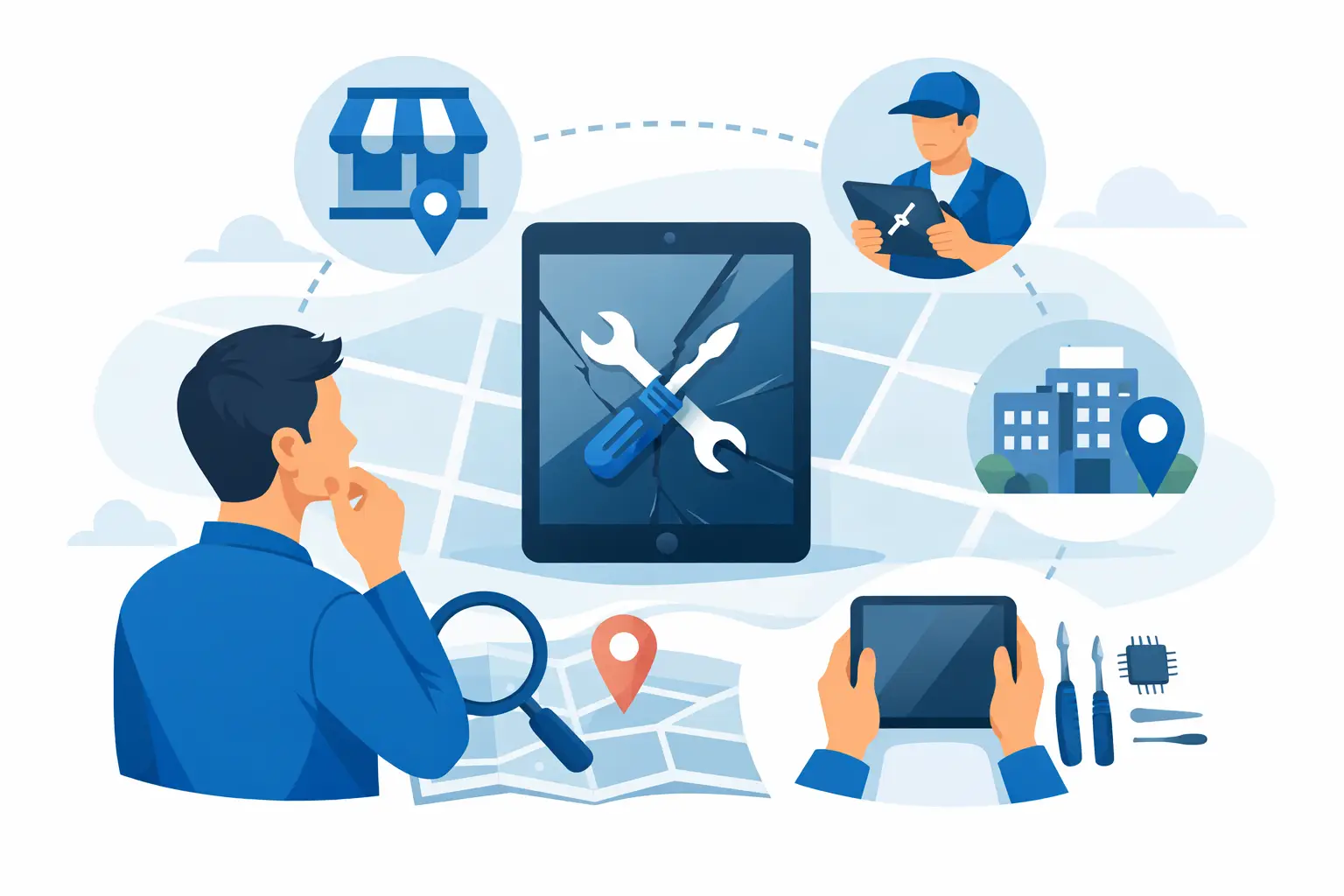 A cracked iPad screen usually happens at the worst possible time – right before class, during a work project, or when your child finally settled down with their favorite app. If you are searching for ipad repair near me, you probably do not want a long wait, a vague quote, or a repair shop that makes you guess what happens next. You want your device fixed quickly, priced fairly, and handled by someone who knows exactly what they are doing.
That is why choosing the right local repair shop matters more than most people think. iPads are expensive, heavily used, and tied to everyday routines. Whether the issue is a shattered screen, battery drain, charging trouble, speaker failure, or liquid damage, the right repair can save you time, money, and the hassle of replacing the whole device.
A cracked iPad screen usually happens at the worst possible time – right before class, during a work project, or when your child finally settled down with their favorite app. If you are searching for ipad repair near me, you probably do not want a long wait, a vague quote, or a repair shop that makes you guess what happens next. You want your device fixed quickly, priced fairly, and handled by someone who knows exactly what they are doing.
That is why choosing the right local repair shop matters more than most people think. iPads are expensive, heavily used, and tied to everyday routines. Whether the issue is a shattered screen, battery drain, charging trouble, speaker failure, or liquid damage, the right repair can save you time, money, and the hassle of replacing the whole device.
 A cracked screen at 8 a.m. can turn into a missed work call by 9, a dead battery by lunch, and a full day of frustration by dinner. That is why same day phone repair Nashua is not just a convenience for most people – it is the fastest way to get your routine back without paying for a replacement you may not need.
When your phone stops working, the biggest question is usually simple: can this be fixed today? In many cases, yes. Screen damage, battery problems, charging issues, camera failures, speaker trouble, and many software-related problems can often be diagnosed and repaired the same day. The real answer depends on the model, the severity of the damage, parts availability, and whether the problem is limited to one component or tied to deeper board-level issues.
A cracked screen at 8 a.m. can turn into a missed work call by 9, a dead battery by lunch, and a full day of frustration by dinner. That is why same day phone repair Nashua is not just a convenience for most people – it is the fastest way to get your routine back without paying for a replacement you may not need.
When your phone stops working, the biggest question is usually simple: can this be fixed today? In many cases, yes. Screen damage, battery problems, charging issues, camera failures, speaker trouble, and many software-related problems can often be diagnosed and repaired the same day. The real answer depends on the model, the severity of the damage, parts availability, and whether the problem is limited to one component or tied to deeper board-level issues.